Mastering Industrial Cleaning Methods for Safer, Leaner Operations
In any industrial environment, cleanliness is more than just a matter of appearance—it’s a crucial factor for safety, efficiency, and productivity. From manufacturing plants and warehouses to processing facilities and refineries, industrial cleaning method play a vital role in ensuring compliance with regulations, protecting worker health, and maintaining equipment performance.
Whether it’s removing hazardous residues, controlling dust, or preparing surfaces for maintenance, the right cleaning technique can make all the difference. In this guide, we’ll explore the most common industrial cleaning methods, their applications, and the benefits they bring to businesses.
Why Industrial Cleaning Matters
Industrial environments are prone to heavy contamination due to constant exposure to dust, grease, chemicals, and other residues. Without regular cleaning, these conditions can lead to:
- Equipment malfunctions caused by buildup or corrosion
- Safety hazards such as slippery floors, combustible dust, or chemical spills
- Non-compliance with health, safety, or environmental regulations
- Poor workplace morale from unclean and unsafe conditions
Implementing the right cleaning strategy ensures that facilities remain operational, workers are protected, and productivity stays on track.
Common Industrial Cleaning Methods
Different industries require different cleaning solutions based on the type of contaminants, surfaces involved, and safety considerations. Here are some widely used methods:
1. High-Pressure Water Cleaning (Pressure Washing)
This method uses high-powered water jets to remove dirt, grease, paint, and other debris from surfaces. It’s particularly effective for cleaning large equipment, tanks, and exterior building surfaces.
Advantages:
- Environmentally friendly (when using only water)
- Can reach difficult areas
- Effective for both light and heavy debris
Best For: Manufacturing equipment, floors, industrial exteriors, tanks, and pipelines.
2. Chemical Cleaning
This involves using specialized cleaning agents—acids, alkalis, or solvents—to break down and remove contaminants.
Advantages:
- Extremely effective for stubborn residues like scale, rust, or oil
- Can be tailored to specific materials and contaminants
Best For: Food processing plants, pharmaceutical facilities, and industries where sanitization is critical.
Note: Requires trained personnel to handle chemicals safely and dispose of waste according to regulations.
3. Dry Ice Blasting
Dry ice blasting uses compressed air to propel dry ice pellets at high speed. Upon impact, the pellets sublimate (turn into gas), lifting dirt and contaminants without leaving residue.
Advantages:
- Non-abrasive and non-conductive
- No secondary waste
- Safe for delicate machinery and electronics
Best For: Electrical components, sensitive machinery, and situations where water-based cleaning is not possible.
4. Abrasive Blasting (Sandblasting, Grit Blasting)
Abrasive blasting involves propelling abrasive materials (sand, glass beads, or steel grit) against a surface to remove rust, paint, or scale.
Advantages:
- Ideal for surface preparation before painting or coating
- Removes deep rust and corrosion
Best For: Shipyards, metal fabrication, and heavy machinery maintenance.
5. Ultrasonic Cleaning
Ultrasonic cleaning uses high-frequency sound waves in a cleaning solution to create microscopic bubbles that dislodge dirt and debris.
Advantages:
- Reaches small crevices and intricate parts
- Gentle on delicate items
- Highly effective for precision components
Best For: Aerospace, medical instruments, and electronic parts.
6. Foam Cleaning
Foam cleaning applies a thick layer of cleaning foam to surfaces, allowing the chemicals to cling and work on stubborn dirt before rinsing away.
Advantages:
- Effective for vertical surfaces and hard-to-reach areas
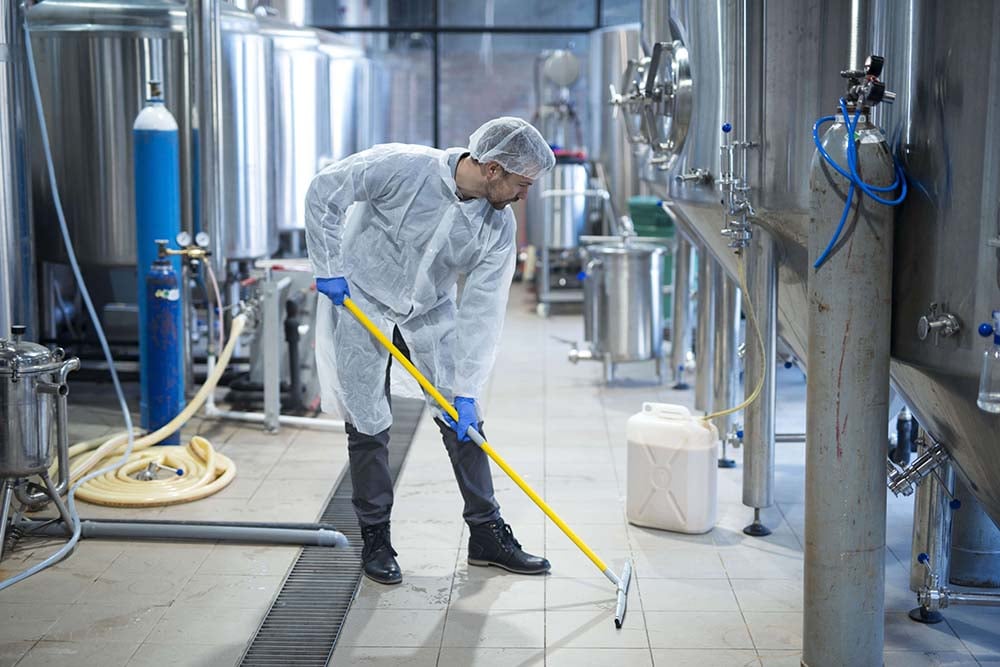
- Great for sanitizing food and beverage production areas
Best For: Food processing facilities, commercial kitchens, breweries.
7. Vacuum Cleaning (Industrial-Grade)
Industrial vacuums remove dust, powders, and debris from floors, walls, and machinery. HEPA-filtered vacuums can handle hazardous dust like asbestos or silica.
Advantages:
- Reduces airborne particles
- Safe for hazardous material collection
Best For: Pharmaceutical, construction, woodworking, and chemical industries.
Factors to Consider When Choosing a Cleaning Method
Selecting the best industrial cleaning method depends on several factors:
- Type of Contaminant: Grease, dust, scale, or hazardous material each require different approaches.
- Surface Material: Delicate surfaces may need gentle cleaning, while heavy-duty surfaces can handle abrasive methods.
- Regulatory Requirements: Some industries (like food or pharma) require specific cleaning standards.
- Safety Concerns: Choose methods that minimize risk to workers and the environment.
- Cost & Downtime: Balance cleaning efficiency with budget and operational schedules.
Benefits of Proper Industrial Cleaning
Investing in the right cleaning method delivers multiple benefits:
- Enhanced Safety – Reduces the risk of accidents caused by spills, debris, or unsafe surfaces.
- Improved Efficiency – Clean equipment works better and lasts longer.
- Regulatory Compliance – Meets industry-specific cleanliness standards.
- Better Work Environment – Boosts employee morale and productivity.
- Reduced Maintenance Costs – Prevents premature wear and costly repairs.
Final Thoughts
Industrial cleaning is not just about keeping a facility looking neat—it’s about maintaining safety, protecting assets, and ensuring peak performance. With a range of techniques available, from high-pressure washing to advanced dry ice blasting, there’s a solution for every industry and cleaning challenge.
By understanding the different industrial cleaning methods and their applications, businesses can choose the most effective, safe, and cost-efficient approach—keeping operations smooth, employees safe, and customers confident in the quality of the work being done.